
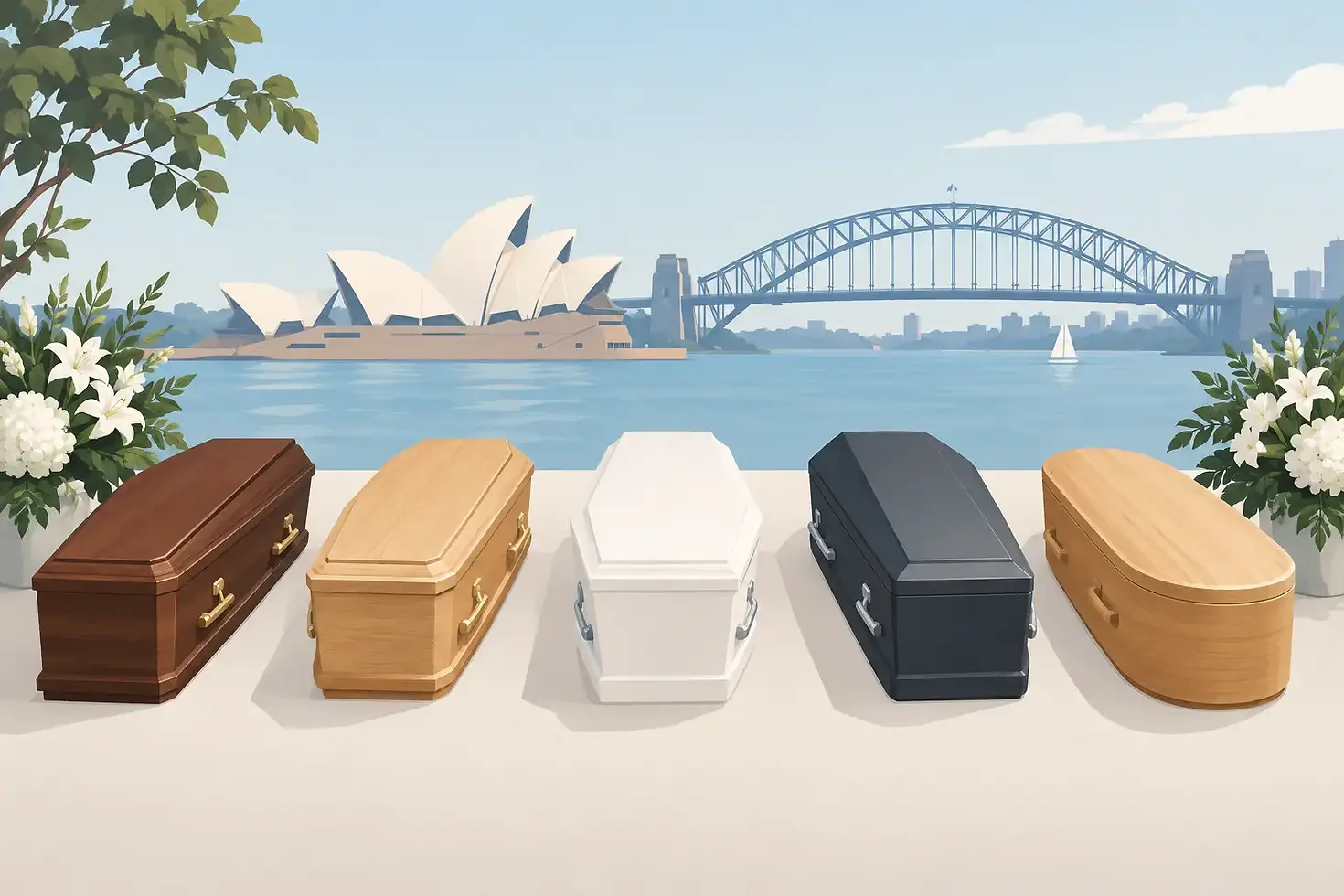
Best Coffin Styles Explained for Sydney Families

A coffin is often one of the first decisions families are asked to make after a death, and it can feel unexpectedly personal. The best coffin styles explained here are not about finding a single “right” option. They are about understanding what you are paying for, what suits the service, and what would feel most fitting for the person you are honouring.
For some families, a simple, dignified coffin is exactly right. Others want natural timber, a favourite colour, meaningful imagery or a more traditional design for a church service. All are valid choices. A good funeral director should explain the options clearly, provide itemised pricing and give you time to choose without pressure.
Coffin or casket: what is the difference?
In Australia, the words are sometimes used interchangeably, but they usually describe different shapes.
A coffin is traditionally wider at the shoulders and tapered at the head and foot. This is the familiar six-sided shape seen in many Australian funeral services. Coffins can be made from timber, MDF, particleboard, cardboard or other approved materials, with a wide range of finishes.
A casket is rectangular, with straight sides and a hinged lid. It is generally larger, often more ornate, and is commonly associated with American-style funerals. Caskets can be appropriate for burial, particularly where a family prefers a formal, traditional presentation, but they are usually more expensive than a standard coffin because they use more material and may include detailed hardware and interior lining.
The right choice depends on personal preference, faith, budget and whether the funeral involves burial or cremation. Neither shape says more about the love held for someone.
Best coffin styles explained by material and finish
The material and finish usually have the greatest effect on a coffin’s appearance and price. It is useful to begin with the level of simplicity or personalisation you want, rather than starting with the most expensive option in a display.
Simple contemporary coffins
Simple coffins are often made from MDF or similar engineered timber and finished in a smooth colour, timber-look laminate or clean white surface. They can look understated and respectful in a chapel, church or graveside setting.
This is a practical choice for families arranging a direct cremation or a modest service. A lower-cost coffin does not need to look plain or impersonal. A neat finish, quality handles and a carefully chosen floral tribute can create a dignified farewell without adding costs that do not matter to your family.
Traditional timber-look coffins
Timber-look coffins remain a popular choice for Australian funerals. Finishes may resemble oak, mahogany, rosewood, teak or other warm timber tones. They suit traditional church services, burial ceremonies and families who prefer a familiar, classic appearance.
Some are made from solid timber, while others use a timber veneer or timber-look finish over an engineered board. The difference can affect price, weight and appearance. It is worth asking directly what the coffin is made from rather than assuming a polished timber appearance means solid wood.
Solid timber coffins
A solid timber coffin has natural grain, weight and character that many families value. Options may include pine, oak, Victorian ash or other timbers, depending on availability. These styles can suit a burial where the family wants a natural, substantial presentation.
The trade-off is cost. Solid timber generally costs more than veneered or engineered alternatives, and the visual difference may be subtle once the coffin is covered with flowers or viewed from a distance during a service. Choose it because the material feels meaningful, not because you feel it is expected.
White and light-coloured coffins
White coffins are often selected for children, young people, or people remembered for warmth, gentleness and simplicity. They can also suit a modern celebration of life, particularly with bright flowers, photographs or colourful order-of-service stationery.
Light-coloured finishes may be high gloss, satin or matte. A high-gloss surface can look formal and polished, while a matte finish may feel softer and more contemporary. The choice is emotional as much as visual, so consider the overall tone of the ceremony and the person’s own style.
Eco-friendly and natural coffins
For families who want to minimise environmental impact, eco-friendly coffin options may include cardboard, plantation timber, wicker, woven fibre or other biodegradable materials. Availability and suitability vary between cemeteries, crematoriums and burial grounds, so the coffin must be checked against the venue’s requirements.
Cardboard coffins are often more affordable and can be personalised with messages, drawings, photographs or printed designs. Wicker and woven styles have a softer, natural appearance and may suit a bushland burial setting or a relaxed outdoor farewell. Natural materials are not automatically the cheapest choice, particularly where products are handmade, so ask for clear prices before deciding.
Personalised printed coffins
A printed coffin can reflect a life in a very direct way. Families may choose a floral pattern, ocean scene, sporting colours, Aboriginal artwork with appropriate permission, a favourite landscape, musical theme or a collage of photos.
This style is not for everyone. Some people find it comforting and expressive, while others prefer the focus to remain on photographs, flowers and spoken tributes. If personalisation feels right, it works best when it genuinely reflects the person rather than trying to include every part of their life on one surface.
Choosing a style for cremation or burial
Most coffin styles can be used for cremation if they meet the crematorium’s requirements. Metal fittings, battery-powered items, some plastics and certain decorative elements may need to be removed or avoided. Your funeral director should manage these details and confirm the coffin is suitable before the service.
For burial, the cemetery may have its own rules about coffin materials, grave liners, vaults or biodegradable options. Families arranging a natural burial should check requirements early, as these can be more specific than those for a conventional cemetery plot.
The service itself also matters. A simple coffin can be ideal for a private cremation followed by a memorial at home, a surf club or a favourite local venue. A solid timber coffin or formal casket may feel more appropriate for a large church funeral and burial. There is no fixed rule, only what fits the farewell you are arranging.
How to choose without overspending
Grief can make every decision feel high stakes. In reality, a few practical questions can quickly narrow the options. Ask to see the full coffin range with prices shown, not only the premium styles. Confirm whether the displayed price includes the lining, handles, nameplate and any required fittings. Then ask whether the coffin is suitable for the planned cremation or burial.
Be wary of the idea that spending more is a measure of respect. The price can rise because of solid timber, imported materials, intricate design, metal hardware or a brand name. Those features may matter to some families, but they are not essential to a meaningful service.
At Sydney Funerals, we believe families should be able to compare coffin options openly, with no hidden mark-ups or pressure to choose beyond their means. The money saved may be better used for a celebrant, flowers, a livestream for relatives overseas, catering after the service, or simply kept aside for the family’s practical needs.
Small details that make a coffin feel personal
A coffin does not have to carry the whole story of a person’s life. Often, the most moving touches are simple: a handwritten note placed inside, a favourite scarf or a small memento where permitted, flowers in colours they loved, or family members placing petals on the coffin at the end of the service.
For a viewing, consider the interior colour and overall finish alongside the person’s clothing and the room where family will gather. For a closed-coffin service, the exterior style, floral arrangement and photographs nearby will have more visual impact. Your funeral director can help coordinate these elements so they feel considered rather than overwhelming.
The best choice is the one that lets your family look at the coffin and feel it belongs in that moment: respectful, honest and right for the person you love. Give yourself permission to choose simply, choose personally, or choose somewhere in between.


Comments